
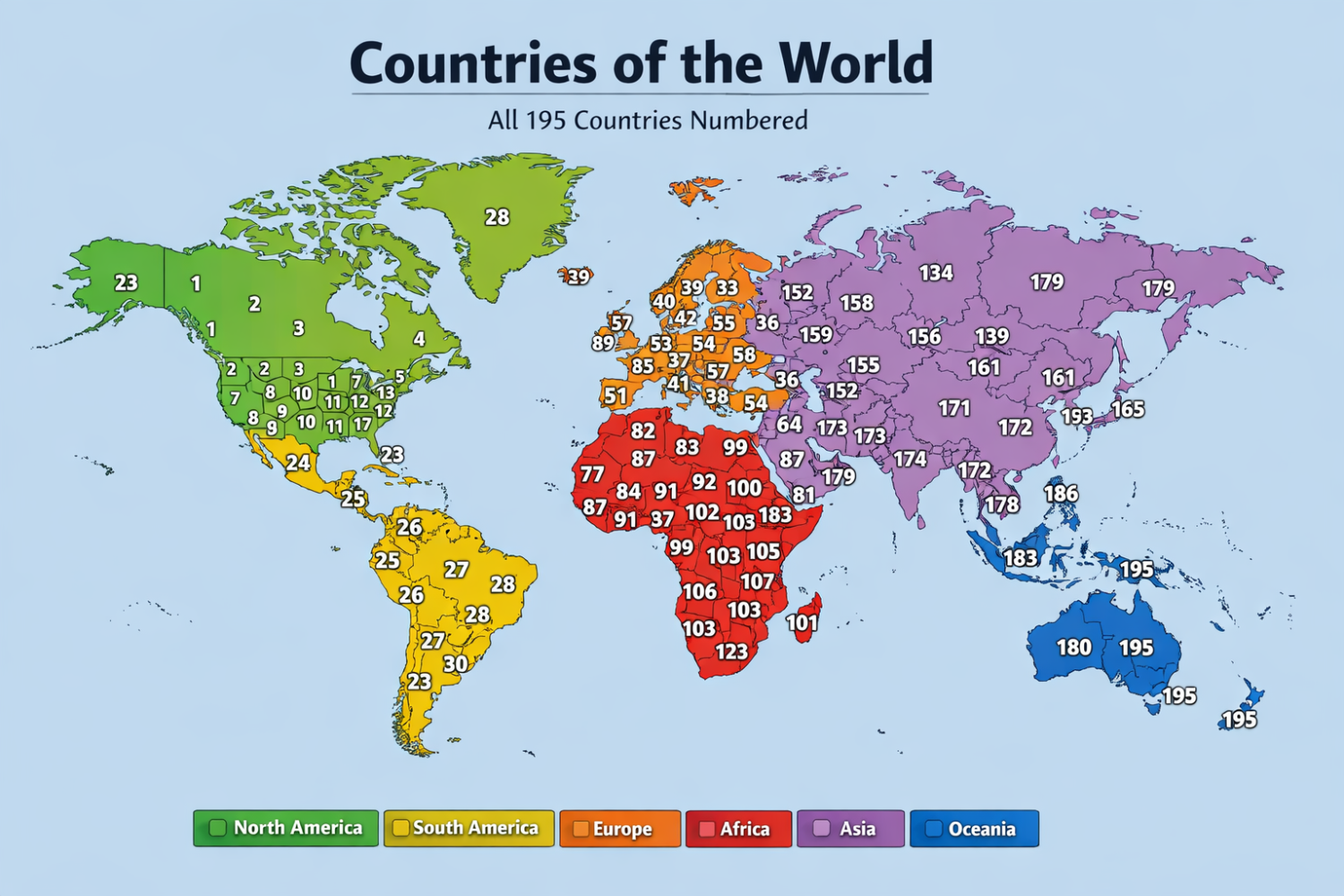
Air travel connects the world through thousands of international airports operating under global aviation standards. International airports are assigned three-letter IATA codes used for airline tickets and four-letter ICAO codes used by air traffic control and aviation operations. These codes allow airlines, airports, and booking systems to identify airports worldwide quickly and accurately.
Major airports act as global aviation hubs, linking continents through thousands of daily flights. With growing global travel demand, large hub airports in Asia, Europe, the Middle East, and North America handle tens of millions of passengers every year.
Major International Airports of the World
This table lists major international airports worldwide including their country, city, airport name, and IATA airport code. These airports act as major global aviation hubs connecting international passengers across continents.
International airports are essential infrastructure that supports global travel, tourism, trade, and economic development. These airports serve as the primary gateways for international passengers and cargo, connecting countries and continents through extensive airline networks. Major international airports are equipped with modern terminals, advanced air traffic control systems, and large runway capacities to accommodate long-haul aircraft and high passenger volumes. Each airport is assigned a unique IATA (International Air Transport Association) airport code, which is widely used in airline ticketing systems, baggage tags, and flight schedules to identify airports worldwide.
Across the globe, thousands of airports operate international flights, but only a select group function as major global aviation hubs due to their strategic location, passenger traffic, and airline connectivity. These airports link travelers from different regions and enable seamless transfers between long-distance flights. For example, airports like Dubai International Airport and Hamad International Airport serve as critical transit hubs connecting Asia, Europe, Africa, and North America. Passengers traveling between continents often pass through these airports due to their extensive airline networks and frequent flight schedules.
In Asia, major international airports such as Singapore Changi Airport, Incheon International Airport, and Tokyo Haneda Airport play a key role in connecting the rapidly growing aviation markets of East and Southeast Asia. These airports handle millions of passengers each year and serve as hubs for global airlines offering connections to Europe, North America, and Oceania.
Europe is home to some of the world’s most historic and busiest aviation centers, including Heathrow Airport, Frankfurt Airport, and Amsterdam Airport Schiphol. These airports function as major international transit hubs linking European destinations with Asia, Africa, and the Americas. Their extensive airline partnerships and high passenger capacity make them vital for global air travel.
North America also hosts several large international airports that rank among the busiest in the world. Airports such as Hartsfield–Jackson Atlanta International Airport, Los Angeles International Airport, and Toronto Pearson International Airport serve as major gateways for transatlantic and transpacific travel, connecting passengers to hundreds of destinations worldwide.
Similarly, airports in Oceania and Africa also contribute significantly to global aviation connectivity. Sydney Kingsford Smith Airport is a key gateway between Australia and international destinations, while O. R. Tambo International Airportconnects Africa to major global routes across Europe, Asia, and the Middle East.
For travelers from Nepal, international journeys typically begin at Tribhuvan International Airport, the country’s primary international gateway. From Kathmandu, passengers can connect to major aviation hubs across Asia and the Middle East before continuing to destinations in Europe, North America, or Australia. These global airport networks make international travel accessible and efficient for millions of passengers every year.
Overall, major international airports act as the backbone of global aviation by facilitating long-distance travel, supporting international tourism, and strengthening economic connections between countries. By linking continents through modern infrastructure and advanced airline networks, these airports play a vital role in shaping the future of global transportation and mobility.
| Continent | Country | City | Airport Name | IATA Code |
|---|---|---|---|---|
| Asia | Nepal | Kathmandu | Tribhuvan International Airport | KTM |
| Asia | India | Delhi | Indira Gandhi International Airport | DEL |
| Asia | India | Mumbai | Chhatrapati Shivaji Maharaj International Airport | BOM |
| Asia | Thailand | Bangkok | Suvarnabhumi Airport | BKK |
| Asia | Singapore | Singapore | Singapore Changi Airport | SIN |
| Asia | Malaysia | Kuala Lumpur | Kuala Lumpur International Airport | KUL |
| Asia | China | Beijing | Beijing Capital International Airport | PEK |
| Asia | China | Shanghai | Shanghai Pudong International Airport | PVG |
| Asia | Japan | Tokyo | Narita International Airport | NRT |
| Asia | Japan | Tokyo | Haneda Airport | HND |
| Asia | South Korea | Seoul | Incheon International Airport | ICN |
| Asia | Hong Kong | Hong Kong | Hong Kong International Airport | HKG |
| Asia | Indonesia | Jakarta | Soekarno–Hatta International Airport | CGK |
| Asia | Philippines | Manila | Ninoy Aquino International Airport | MNL |
| Asia | Vietnam | Ho Chi Minh City | Tan Son Nhat International Airport | SGN |
| Asia | Taiwan | Taipei | Taiwan Taoyuan International Airport | TPE |
| Middle East | Qatar | Doha | Hamad International Airport | DOH |
| Middle East | UAE | Dubai | Dubai International Airport | DXB |
| Middle East | UAE | Abu Dhabi | Zayed International Airport | AUH |
| Middle East | Saudi Arabia | Jeddah | King Abdulaziz International Airport | JED |
| Middle East | Saudi Arabia | Riyadh | King Khalid International Airport | RUH |
| Middle East | Oman | Muscat | Muscat International Airport | MCT |
| Middle East | Kuwait | Kuwait City | Kuwait International Airport | KWI |
| Middle East | Bahrain | Manama | Bahrain International Airport | BAH |
| Europe | United Kingdom | London | Heathrow Airport | LHR |
| Europe | France | Paris | Charles de Gaulle Airport | CDG |
| Europe | Germany | Frankfurt | Frankfurt Airport | FRA |
| Europe | Germany | Munich | Munich Airport | MUC |
| Europe | Netherlands | Amsterdam | Amsterdam Airport Schiphol | AMS |
| Europe | Spain | Madrid | Adolfo Suárez Madrid–Barajas Airport | MAD |
| Europe | Spain | Barcelona | Barcelona–El Prat Airport | BCN |
| Europe | Italy | Rome | Leonardo da Vinci–Fiumicino Airport | FCO |
| Europe | Switzerland | Zurich | Zurich Airport | ZRH |
| Europe | Austria | Vienna | Vienna International Airport | VIE |
| Europe | Turkey | Istanbul | Istanbul Airport | IST |
| Europe | Finland | Helsinki | Helsinki Airport | HEL |
| Europe | Denmark | Copenhagen | Copenhagen Airport | CPH |
| Europe | Belgium | Brussels | Brussels Airport | BRU |
| North America | USA | Los Angeles | Los Angeles International Airport | LAX |
| North America | USA | New York | John F. Kennedy International Airport | JFK |
| North America | USA | Chicago | O'Hare International Airport | ORD |
| North America | USA | Dallas | Dallas/Fort Worth International Airport | DFW |
| North America | USA | Atlanta | Hartsfield–Jackson Atlanta International Airport | ATL |
| North America | USA | San Francisco | San Francisco International Airport | SFO |
| North America | Canada | Toronto | Toronto Pearson International Airport | YYZ |
| North America | Canada | Vancouver | Vancouver International Airport | YVR |
| North America | Canada | Montreal | Montréal–Trudeau International Airport | YUL |
| Oceania | Australia | Sydney | Sydney Kingsford Smith Airport | SYD |
| Oceania | Australia | Melbourne | Melbourne Airport | MEL |
| Oceania | Australia | Brisbane | Brisbane Airport | BNE |
| Oceania | New Zealand | Auckland | Auckland Airport | AKL |
| Oceania | Fiji | Nadi | Nadi International Airport | NAN |
| Africa | Ethiopia | Addis Ababa | Addis Ababa Bole International Airport | ADD |
| Africa | South Africa | Johannesburg | O. R. Tambo International Airport | JNB |
| Africa | Kenya | Nairobi | Jomo Kenyatta International Airport | NBO |
| Africa | Egypt | Cairo | Cairo International Airport | CAI |
| Africa | Morocco | Casablanca | Mohammed V International Airport | CMN |
World Airport IATA and ICAO Code List
| Country | City | Airport Name | IATA Code | ICAO Code |
|---|---|---|---|---|
| Nepal | Kathmandu | Tribhuvan International Airport | KTM | VNKT |
| India | Delhi | Indira Gandhi International Airport | DEL | VIDP |
| India | Mumbai | Chhatrapati Shivaji Maharaj International Airport | BOM | VABB |
| UAE | Dubai | Dubai International Airport | DXB | OMDB |
| Qatar | Doha | Hamad International Airport | DOH | OTHH |
| Turkey | Istanbul | Istanbul Airport | IST | LTFM |
| Singapore | Singapore | Singapore Changi Airport | SIN | WSSS |
| South Korea | Seoul | Incheon International Airport | ICN | RKSI |
| Japan | Tokyo | Haneda Airport | HND | RJTT |
| China | Shanghai | Shanghai Pudong International Airport | PVG | ZSPD |
| United Kingdom | London | Heathrow Airport | LHR | EGLL |
| France | Paris | Charles de Gaulle Airport | CDG | LFPG |
| Germany | Frankfurt | Frankfurt Airport | FRA | EDDF |
| Netherlands | Amsterdam | Amsterdam Schiphol Airport | AMS | EHAM |
| USA | Los Angeles | Los Angeles International Airport | LAX | KLAX |
| USA | New York | John F Kennedy International Airport | JFK | KJFK |
| USA | Chicago | O'Hare International Airport | ORD | KORD |
| USA | Atlanta | Hartsfield-Jackson Atlanta International Airport | ATL | KATL |
| Canada | Toronto | Toronto Pearson International Airport | YYZ | CYYZ |
| Australia | Sydney | Sydney Kingsford Smith Airport | SYD | YSSY |
Global Aviation Airport Database – IATA & ICAO Codes
International airports connect countries across the world through global airline networks. Each airport has a unique three-letter IATA code used for airline reservations and a four-letter ICAO code used by aviation authorities and air traffic control. These codes allow airlines, airports, and travel agencies to identify airports quickly and accurately in booking systems.
World Airport IATA and ICAO Code List
| Country | City | Airport Name | IATA Code | ICAO Code |
|---|---|---|---|---|
| Nepal | Kathmandu | Tribhuvan International Airport | KTM | VNKT |
| India | Delhi | Indira Gandhi International Airport | DEL | VIDP |
| India | Mumbai | Chhatrapati Shivaji Maharaj International Airport | BOM | VABB |
| UAE | Dubai | Dubai International Airport | DXB | OMDB |
| Qatar | Doha | Hamad International Airport | DOH | OTHH |
| Turkey | Istanbul | Istanbul Airport | IST | LTFM |
| Singapore | Singapore | Singapore Changi Airport | SIN | WSSS |
| South Korea | Seoul | Incheon International Airport | ICN | RKSI |
| Japan | Tokyo | Haneda Airport | HND | RJTT |
| China | Shanghai | Shanghai Pudong International Airport | PVG | ZSPD |
| United Kingdom | London | Heathrow Airport | LHR | EGLL |
| France | Paris | Charles de Gaulle Airport | CDG | LFPG |
| Germany | Frankfurt | Frankfurt Airport | FRA | EDDF |
| Netherlands | Amsterdam | Amsterdam Airport Schiphol | AMS | EHAM |
| USA | Los Angeles | Los Angeles International Airport | LAX | KLAX |
| USA | New York | John F Kennedy International Airport | JFK | KJFK |
| USA | Chicago | O'Hare International Airport | ORD | KORD |
| USA | Atlanta | Hartsfield-Jackson Atlanta International Airport | ATL | KATL |
| Canada | Toronto | Toronto Pearson International Airport | YYZ | CYYZ |
| Australia | Sydney | Sydney Kingsford Smith Airport | SYD | YSSY |
Major Airline Hub Airports of the World
Major airline hubs are airports where airlines concentrate flight operations and connect passengers between multiple destinations worldwide.
| Airline | Hub Airport | Country |
|---|---|---|
| Emirates | Dubai International Airport | United Arab Emirates |
| Qatar Airways | Hamad International Airport | Qatar |
| Turkish Airlines | Istanbul Airport | Turkey |
| Singapore Airlines | Singapore Changi Airport | Singapore |
| Lufthansa | Frankfurt Airport | Germany |
| Air France | Paris Charles de Gaulle Airport | France |
| British Airways | London Heathrow Airport | United Kingdom |
| Delta Air Lines | Hartsfield-Jackson Atlanta International Airport | United States |
| American Airlines | Dallas Fort Worth International Airport | United States |
| Cathay Pacific | Hong Kong International Airport | Hong Kong |
Conclusion
Global aviation plays a crucial role in connecting people, economies, and cultures through an extensive network of international airports, airline hubs, and air transport systems. Around the world, thousands of airports operate under standardized identification systems such as IATA and ICAO airport codes, which help airlines, travel agencies, and aviation authorities manage flights, reservations, and global air traffic efficiently. Major international airports serve as important gateways for international travelers, linking continents through long-haul flights and seamless connections.
Large hub airports located in major aviation centers such as Dubai International Airport, Hamad International Airport, Istanbul Airport, and Singapore Changi Airport play a critical role in global connectivity by allowing passengers to transfer between flights and reach destinations across Europe, Asia, North America, and Oceania. These hubs are supported by major international airlines that operate extensive route networks connecting hundreds of cities worldwide.
Similarly, some airports rank among the busiest aviation centers globally, handling tens of millions of passengers annually. Airports such as Hartsfield–Jackson Atlanta International Airport, London Heathrow Airport, Tokyo Haneda Airport, and Indira Gandhi International Airport demonstrate the scale and importance of global aviation infrastructure. These airports act as essential transportation hubs supporting tourism, trade, education, and international mobility.
For travelers from Nepal, global air travel typically begins at Tribhuvan International Airport, the country’s primary international gateway. From Kathmandu, passengers can connect to major international transit hubs across the Middle East, Asia, and Europe before continuing their journeys to destinations worldwide. These connections make it possible for students, tourists, business travelers, and families to travel efficiently between Nepal and major global cities.
Understanding airport databases, airline hubs, and the busiest airports in the world helps travelers make better decisions when planning international trips. Comprehensive aviation information—such as airport codes, airline networks, and global connectivity—also helps travel agencies provide accurate flight search results and competitive airfare options. For travel platforms like Nepal Cheap Flights, maintaining a detailed global aviation database enhances the ability to assist passengers in finding convenient routes, reliable airlines, and affordable international flight options to destinations across the world.